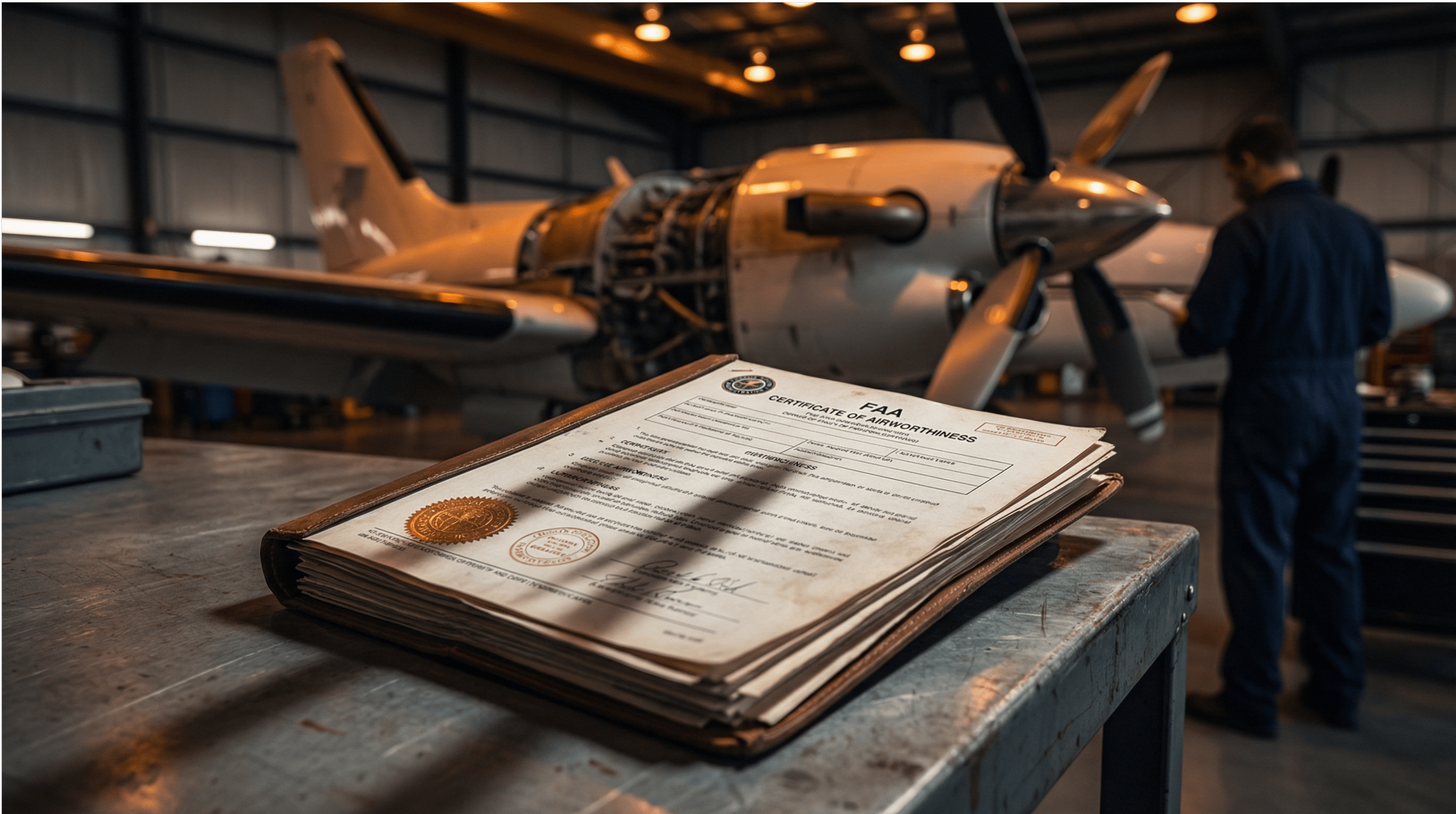
FAA Certificate Backlog Is Creating a Once-in-a-Lifetime Acquisition Window

What does it cost to start a Part 145 repair station from scratch in 2026?
Eighteen to thirty-six months of your life. Half a million dollars in compliance infrastructure. Countless rounds with your local FSDO. And at the end of all that, zero guarantee the FAA signs off.
Or you can buy one that already exists.
That is the simplest version of the thesis. But the implications run much deeper than a single transaction, and most of the capital chasing aviation deals right now has no idea what it is looking at.
The Backlog Nobody Is Talking About
The FAA is overwhelmed. That is not an opinion. It is a staffing and workload reality that has been compounding since 2020 and shows no signs of reversing.
New certificate applications for Part 135 air carriers, Part 141 flight schools, and Part 145 repair stations are sitting in queues that stretch 18 to 36 months. In some FSDO districts, longer. The reasons are structural: post-COVID regulatory catch-up, new Safety Management System mandates consuming inspector bandwidth, and a persistent shortage of experienced FAA inspectors who understand the complexity of modern aviation operations.
This is not a temporary bottleneck. The FAA's own workforce projections suggest the certification pipeline will remain constrained through at least 2028. Every new SMS compliance requirement, every new operational standard, every inspector retirement adds pressure to a system that was already running behind.
For anyone trying to enter the aviation services market from scratch, this is a wall. For anyone who already holds a certificate, it is a moat.
Certificates Are Assets. Price Them Accordingly.
Here is what most people outside aviation do not understand: an FAA certificate is not a piece of paper. It is a living, breathing operational authorization that took years to earn, costs real money to maintain, and cannot be replicated on any timeline that makes financial sense for an acquirer.
A Part 145 repair station certificate with a robust capability list represents a competitive franchise. The holder can perform work that no one else in their geography can legally perform without going through the same multi-year approval process. That is not a nice-to-have. That is a defensible market position with regulatory protection built in.
The same logic applies to Part 141 flight training certificates, Part 135 air carrier certificates, and every other FAA authorization that requires demonstrated competence, infrastructure, and ongoing compliance. The time-to-replicate gap means acquirers are not just buying a business. They are buying 18 to 36 months of monopoly protection in their market.
And yet, most aviation businesses are valued as if the certificate is worth nothing. Generalist appraisers and generalist PE firms apply standard EBITDA multiples without any adjustment for the regulatory moat. That is an error, and it creates arbitrage.
Certificate Arbitrage in Practice
Let us walk through a real scenario.
A Part 145 MRO shop in the southeastern United States. Three million dollars in EBITDA. Twenty-year operating history. Clean compliance record. Capable of heavy maintenance on two major airframe types.
A generalist buyer looks at this and sees a 4 to 5x EBITDA business. Twenty years old, founder-dependent, small market. Standard lower-middle-market pricing.
An aviation-fluent buyer looks at the same business and sees something entirely different. That capability list took a decade to build. The certificate would take two to three years to replicate, assuming approval. The compliance infrastructure is mature and transferable. The customer relationships are locked in because switching to an uncertified shop is not an option.
The gap between those two valuations is the arbitrage. And it exists in thousands of aviation businesses across North America right now.
Who Benefits
If you are an operator holding an FAA certificate: your asset is worth more than you think. The backlog has structurally increased the replacement cost of what you hold. Any buyer who understands this will pay accordingly. Any buyer who does not understand this is the wrong buyer.
If you are an investor looking for structural advantage: certificate arbitrage is one of the cleanest moat stories in lower-middle-market M&A. The barrier is real, it is regulatory, and it is getting wider, not narrower.
If you are a generalist PE firm: this is why you keep getting outbid by people who understand the space. The certificate is not a line item. It is the asset.
The Window
The current backlog is not permanent. The FAA will eventually modernize its certification processes. New technology will streamline applications. Inspector capacity will recover. When that happens, the time-to-replicate advantage compresses, and the arbitrage closes.
That gives acquirers with regulatory fluency a defined window. Somewhere between now and 2030, this structural advantage will peak. The operators who consolidate during this window will own platforms with regulatory moats that took decades to build. Everyone who waits will be paying full price to enter a market that no longer offers the same asymmetric setup.
The clock is running.
If you hold an FAA certificate and you are thinking about your next chapter, we should talk. If you are an investor looking for structural moat in aviation, this is where it starts.
Continue Reading